Bwindi Impenetrable National Park
Where ancient forest swallows you whole and mountain gorillas move like shadows through centuries-old mist. Half the world’s remaining gorillas live here.
Africa’s Most Profound Wildlife Encounter
Bwindi Impenetrable National Park is not simply a destination — it is an experience that rewires the soul. Cloaking the steep hillsides of southwestern Uganda, this ancient montane forest has survived ice ages, continental shifts, and millennia of rainfall to become one of the planet’s most biologically rich ecosystems. In 1994, UNESCO declared it a World Heritage Site, recognising what those who trek its muddy trails already know: this place is irreplaceable.
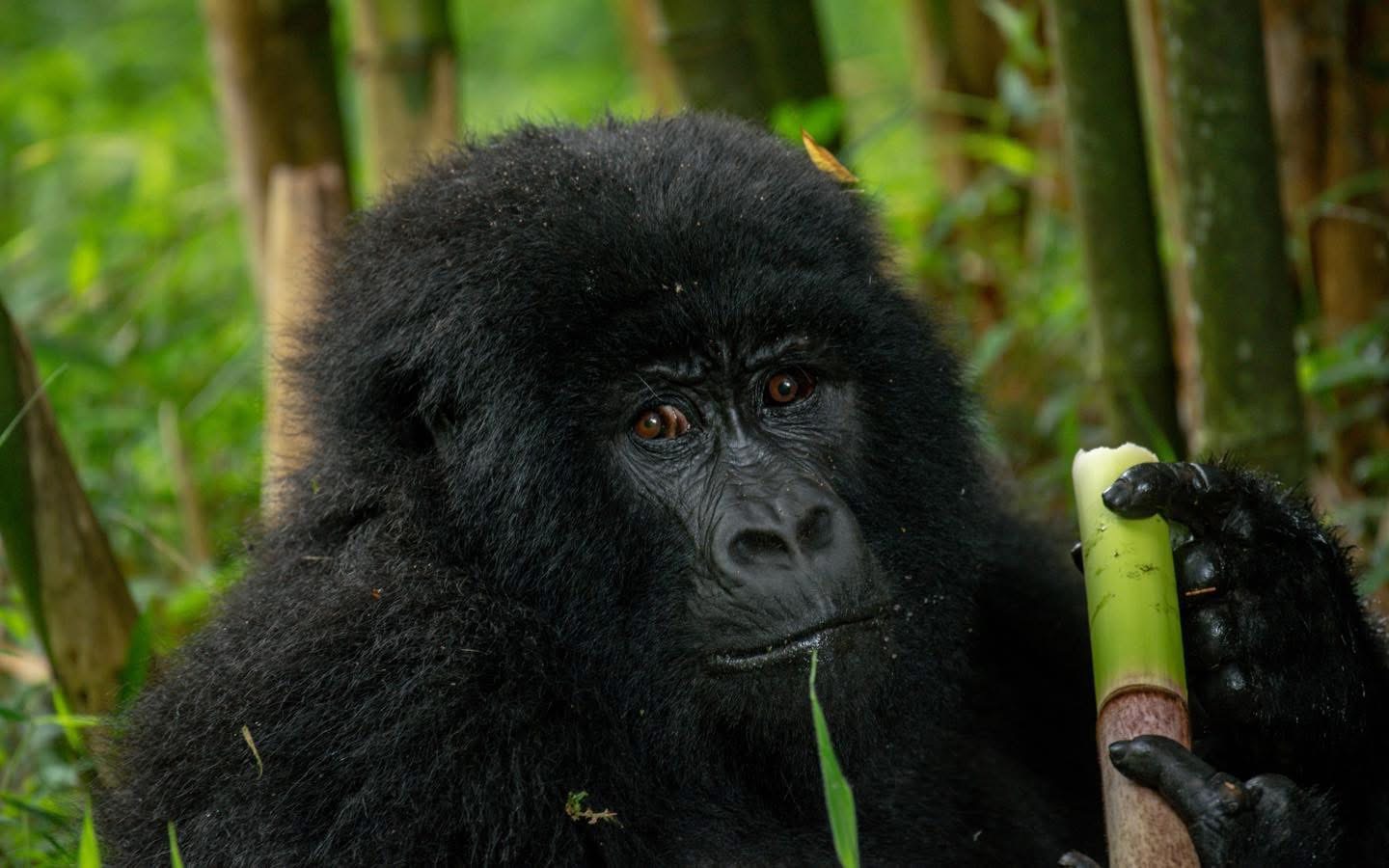
The name says everything. “Impenetrable” comes from the Rukiga word mubwindi, meaning place of darkness. Step beneath the canopy and light fractures into green, the air thickens with moss and moisture, and every sound carries differently. Then — a branch cracks. A silverback emerges through the undergrowth, and the world contracts to this single, thunderstruck moment.
With over 460 mountain gorillas — more than half the global population — distributed across more than 20 habituated families in four trekking sectors, Bwindi offers the most reliable and varied gorilla trekking experience on earth. No two treks are the same, no two encounters identical. At Apes & Wildlife Safaris, we have guided guests into Bwindi for years, and we still hold our breath at the first sight of those intelligent amber eyes.
Beyond gorillas, Bwindi harbours over 120 mammal species, 672 bird species including 23 Albertine Rift endemics, and more than 1,000 plant species. This is Uganda’s single greatest wildlife treasure.
Permits are limited to 8 people per gorilla group per day. Demand far exceeds supply — book months in advance through Apes & Wildlife Safaris to secure your date.
East African residents: $700 · Uganda citizens: UGX 250,000
Minimum age for trekking is 15 years. If you show flu or cold symptoms on the day, you may be turned away to protect the gorillas’ health. Wear long sleeves, long trousers, and sturdy waterproof boots. A porter ($15–20) is strongly recommended — the terrain is relentless.
Wildlife You Will Encounter
Mountain Gorillas
The undisputed star. Over 460 individuals in 20+ habituated families make Bwindi home to the world’s largest mountain gorilla population. Each trekking encounter lasts exactly one hour — one of the most regulated and intimate wildlife experiences on the planet.
Chimpanzees & Other Primates
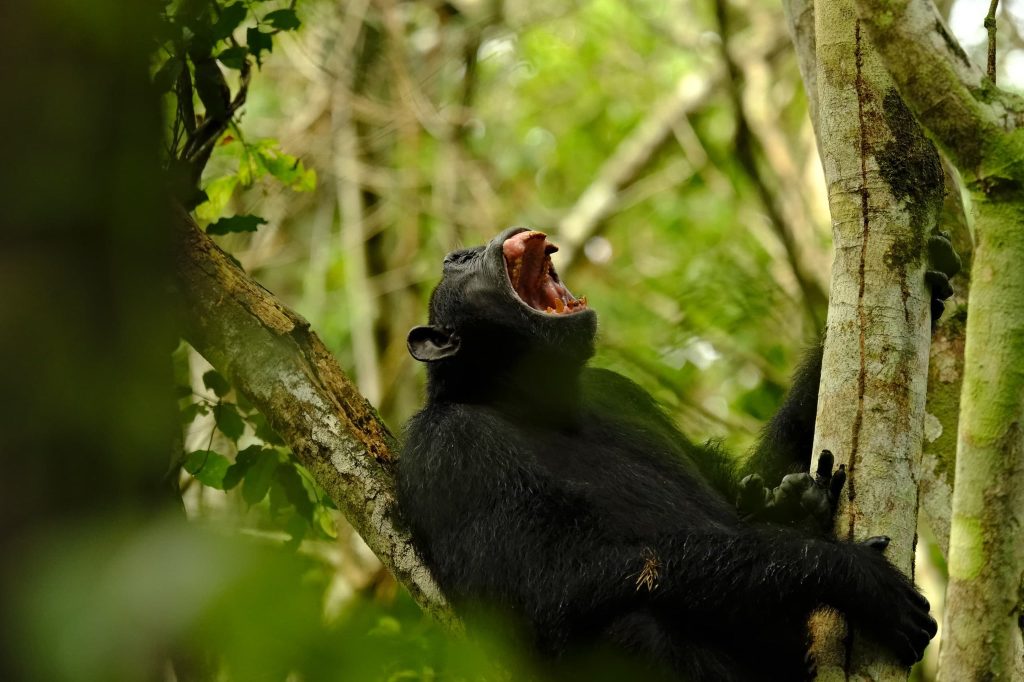
Eight primate species share the canopy with gorillas: chimpanzees, red-tailed monkeys, L’Hoest’s monkeys, grey-cheeked mangabeys, black-and-white colobus, olive baboons, bushbabies, and pottos. A primate-focused day in Bwindi yields remarkable sightings.
672 Bird Species
Africa’s finest montane birding destination. Bwindi claims 23 Albertine Rift endemics including African green broadbill, Shelley’s crimsonwing, and the handsome francolin. The forest’s acoustic richness alone justifies a dedicated birding day with expert guides.
Forest Elephants & Buffalo
African forest elephants, secretive and smaller than their savanna cousins, move through Bwindi’s valleys. Buffalo herds emerge at forest edges, particularly in the Ruhija sector. Both require vigilance and enhance the sense of wilderness adventure.
Chameleons & Reptiles
Three-horned chameleons pace slowly along branches, Jackson’s chameleons display iridescent colour, and over 27 reptile species navigate the forest floor. For keen observers, the smaller wildlife rewards a slow, attentive pace.
Ancient Forest Ecosystem
Over 1,000 flowering plant species, 104 fern species, and 60 tree species create a layered ecosystem that has existed for 25,000 years — surviving even the last Ice Age as a forest refugium. Walking here is walking through deep time.
Four Gates Into the Forest
Bwindi is divided into four distinct trekking sectors, each with its own character, terrain, and habituated gorilla families. Choosing the right sector transforms your experience.
The original sector — Bwindi’s northern gateway and most established trekking area. Moderate trails, reliable gorilla contact, and the classic base for Bwindi first-timers. Home to the famous Mubare group, the first to be habituated back in 1991. The nearby Buhoma community offers excellent cultural experiences.
The newest and most popular sector, with the highest number of habituated gorilla families in Bwindi. Rushaga is also the only sector offering habituation experiences, where you can spend up to 4 hours with a partially habituated group in the raw process of becoming accustomed to humans. Extraordinary and unscripted.
Perched on Bwindi’s southern edge, Nkuringo offers some of Uganda’s most dramatic highland scenery. The notorious Nkuringo descent is steep and demanding — but the reward is walking alongside gorillas against a backdrop of the Virunga volcanoes. Arguably Bwindi’s most cinematic sector.
Set at Bwindi’s highest elevation, Ruhija is the birdwatcher’s sector. Cold, misty, and gloriously isolated, it commands views across Uganda’s highlands and is the primary area for Albertine Rift endemic species. The Bitukura and Oruzogo gorilla families here are relaxed and habituated to extended observation.
Best Time to Visit Bwindi
The optimal window. Trails are firm, forest paths manageable, and gorilla tracking times are often shorter. This is East Africa’s most popular safari period — book permits and accommodation 6–12 months ahead through Apes & Wildlife Safaris.
Second-best for trekking conditions. Fewer visitors than June–August, making it an ideal window for those who prefer quieter trails. Holiday season (Christmas–New Year) fills quickly — advance booking is essential.
Heavier rainfall makes trails muddier and tracking more demanding. However, gorillas are trekked successfully every day of the year — and the forest at its wettest is hauntingly beautiful. Permits are more available and lodges offer better rates.
The forest is intensely green, fruit is abundant, and gorilla behaviour is fascinating. The wettest months can mean deep mud and longer treks, but experienced trackers maintain near-100% encounter rates. Best rates of the year apply in this shoulder season.
Curated Safaris Including Bwindi
Every Apes & Wildlife Safaris itinerary is built around your interests, travel pace, and group size. These fan-favourite packages all include Bwindi gorilla trekking.
12-Day Uganda Birding Coupled with Gorilla & Chimpanzee
Essential Bwindi Trekking Tips
Book Your Permit Early
Gorilla permits sell out months in advance, especially for June–August and December–February. Contact Apes & Wildlife Safaris as early as possible — we secure and hold permits on your behalf.
Hire a Porter
The terrain is steep, wet, and relentless. A local porter costs $15–20 and carries your day pack, assists on difficult sections, and supports the local community. Arguably the best $20 you will spend on any safari.
Pack Layers
Bwindi sits at 1,160–2,607m altitude. Mornings are cold and misty; afternoons can be warm once you’re moving. A lightweight waterproof jacket, fleece, and moisture-wicking base layers are non-negotiable.
Stay Silent in the Forest
When trackers find the gorillas, silence amplifies everything. Turn off notifications, speak in whispers, and let the experience happen to you rather than through your camera screen. The gorillas respond to stillness.
The Night Before Matters
Stay inside or immediately adjacent to the park. Post-trek, you want to absorb the experience — not drive for hours. Our recommended lodge partners in each sector are selected for proximity, quality, and conservation commitment.
Combine with Other Parks
Bwindi pairs beautifully with Queen Elizabeth National Park (tree-climbing lions, hippos) and Kibale Forest (chimpanzee trekking). Most of our Uganda itineraries combine 2–3 parks for a complete experience.
Your Gorilla Encounter Awaits
Let Apes & Wildlife Safaris handle every detail — permits, transfers, accommodation, and expert guiding — so you arrive at Bwindi with nothing to do but be present.