
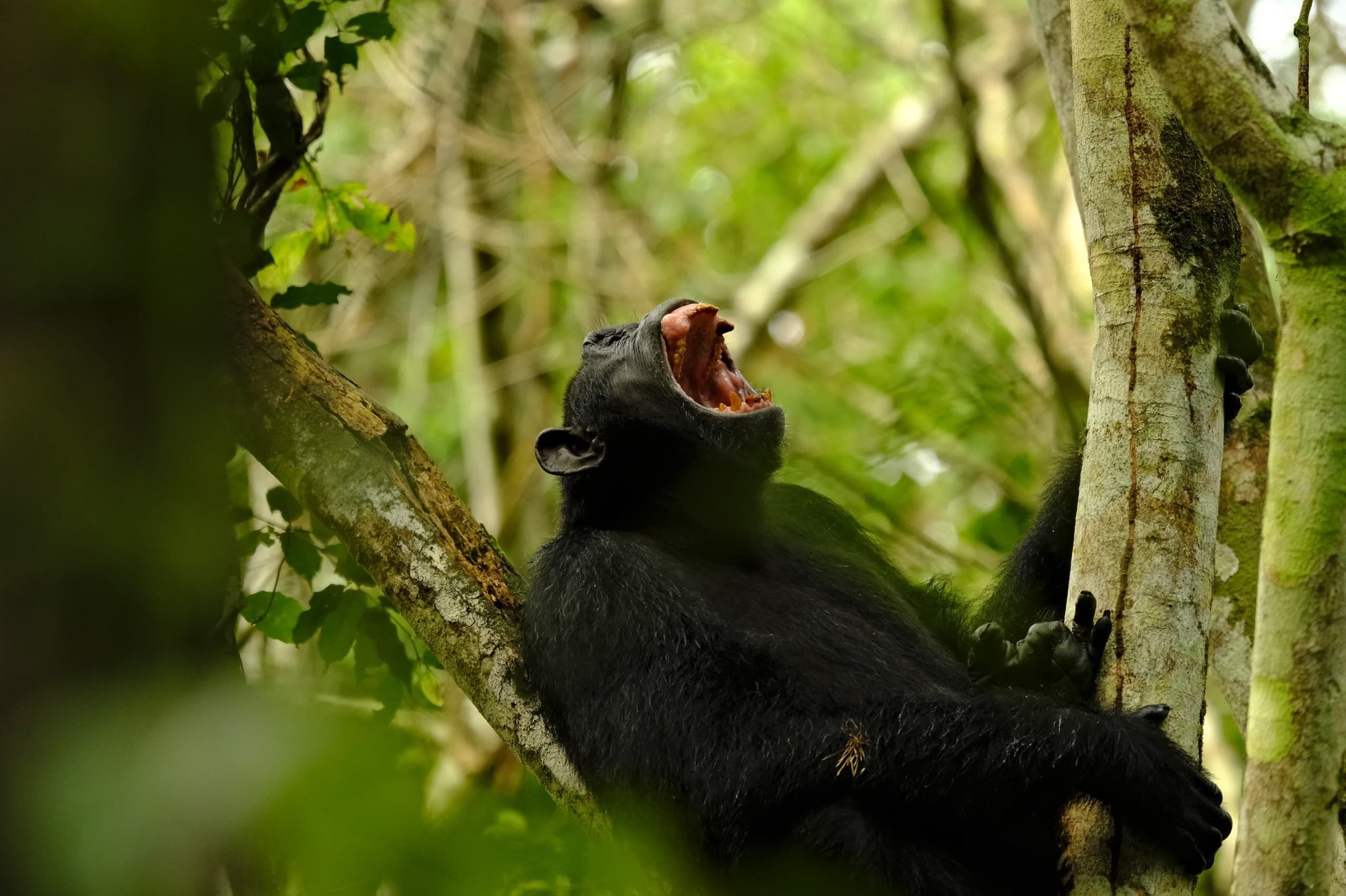
Kibale National Park
Thirteen primate species share 795 square kilometres of ancient Albertine rainforest. Habituated chimpanzees call from the canopy. Kibale is the world’s single greatest primate destination.
More Chimpanzees Per Square Mile Than Anywhere on Earth
Kibale National Park holds the highest primate density of any habitat in Africa. Within its 795 square kilometres of tropical rainforest, 13 primate species — led by over 1,450 habituated chimpanzees — navigate a multi-layered canopy ecosystem evolved over millions of years.
Chimpanzee trekking in Kibale is fundamentally different from gorilla trekking. Chimpanzees are fast, vocal, and social — they call, chase, display, and groom with a familiarity that makes their genetic proximity to us viscerally real. Encounters with the Kanyanchu community can last several hours as groups move through their territory with complete indifference to observers.
Kibale is also the gateway to the Bigodi Wetland Sanctuary — a community-managed wetland adjacent to the park, one of Uganda’s finest birding spots. Our 5-Day Gorilla and Chimpanzee Safari combines Kibale with Bwindi for Uganda’s ultimate primate double.
Permits limited to 32 people per trek across 4 groups of 8. Habituation experience (full day with chimpanzees) costs $250. Bigodi Wetland walk approximately $10. Book all permits well in advance through Apes & Wildlife Safaris.
Wear neutral clothing and closed-toe hiking shoes. Chimpanzees move at speed through undergrowth — moderate fitness required. The Kanyanchu Visitor Centre is the main base. Evening treks at 2pm are quieter than the popular morning trek.
Wildlife & Natural Highlights
East African Chimpanzees
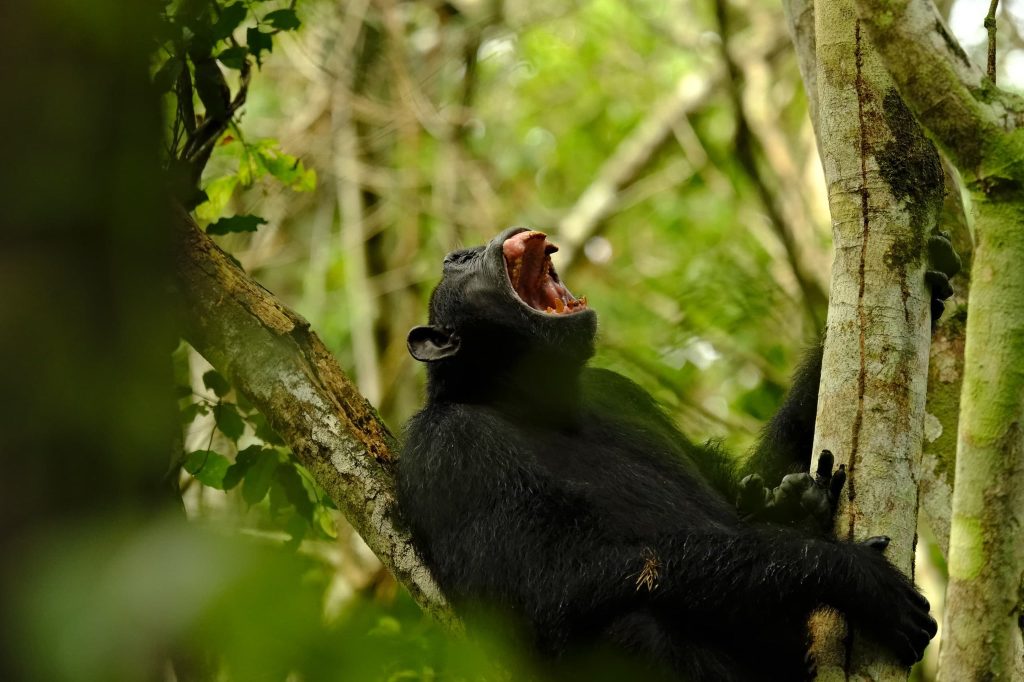
Over 1,450 chimpanzees make Kibale the world’s premier chimp destination. The Kanyanchu community is fully habituated — encounters are close, prolonged, and extraordinary. Watching chimps use tools, demonstrate emotions, and interact socially is profoundly moving.
12 Additional Species
Red-tailed monkey, grey-cheeked mangabey, olive colobus, Uganda red colobus, L’Hoest’s monkey, black-and-white colobus, and more. A single forest walk can yield five or six primate species — a density found nowhere else in East Africa.
375 Forest Birds
Green-breasted pitta, African pitta, African dwarf kingfisher, and over 375 species inhabit Kibale’s forest. The adjacent Bigodi Wetland adds papyrus specialists including the papyrus gonolek and white-winged warbler.
Forest Elephants & Buffalo
Forest elephants move through Kibale’s interior. Buffalo herds graze at forest edges. Bushbuck are frequently encountered. Duiker and red forest duiker are also resident.
Pottos & Bushbabies
Kibale’s nocturnal world rewards guided night walks — pottos moving with glacial slowness, Thomas’s bushbabies with their enormous reflective eyes, and various owl species calling through the darkness.
Bigodi Wetland Sanctuary
The Bigodi community wetland boardwalk offers 200+ bird species, colobus monkeys, and mongoose. An essential half-day complement to the main chimp trek that also supports local conservation livelihoods.
Key Areas & Experiences
Kibale has several access points, with Kanyanchu as the primary hub.
The heart of Kibale tourism. Two daily treks depart at 8am and 2pm, each limited to 32 visitors. Habituation experience treks depart at 6am for a full day with a group still being introduced to human presence.
A 4km community boardwalk through papyrus wetland. Over 200 bird species, red colobus, vervet monkeys, and mongoose. One of Uganda’s most successful community conservation stories.
Deep forest walks lead through the Magombe Swamp — seasonally flooded forest rich in fungi, butterflies, and the rarer forest mammals that avoid the main trekking paths.
The volcanic crater lake chain north of Kibale offers spectacular scenery. Kayaking on the crater lakes, with Rwenzori Mountain views, is an unforgettable close to a Kibale forest day.
Best Time to Visit Kibale National Park
Trails firm, chimpanzees more predictable in ranging. Encounter durations average longer. Book permits at least 3 months ahead.
Excellent conditions. Migratory birds swell the forest list. A quieter alternative to peak season.
Light rains make the forest intensely atmospheric. Chimpanzee encounters consistent year-round regardless of weather.
Forest at maximum biodiversity. Lowest rates of year. Chimpanzees tracked successfully in all seasons.
Curated Safaris Including Kibale
Every Apes & Wildlife Safaris itinerary is tailor-made for your group and can be customised to include Kibale National Park alongside other parks across Uganda.
Essential Tips for Kibale National Park
Book the Habituation Experience
The full-day chimpanzee habituation experience ($250) is Kibale’s hidden gem — 6 hours with a group still being habituated. Raw, unscripted, and unforgettable. Only available in Kibale.
Combine with Bwindi
Kibale and Bwindi are 3–4 hours apart. Pairing chimp trekking with gorilla trekking in a single Uganda itinerary is the definitive East African primate experience.
Morning Trek for Photography
The 8am trek catches chimpanzees at their most active. Light in the forest is better in the morning, and groups are often encountered more quickly.
Do the Bigodi Walk
The Bigodi community walk is inexpensive, supports local conservation, and delivers excellent birding and additional primate encounters. Essential.
Night Walk for Nocturnal Wildlife
Guided night walks from Kanyanchu reveal pottos, bushbabies, owls, and chameleons — arrange through Apes & Wildlife Safaris when booking your full itinerary.
Pack Rain Gear Always
Even in dry season, forest rain is possible. A lightweight packable rain jacket weighs nothing and prevents a soaking that cuts a trek short.
Your Uganda Safari Awaits
Apes & Wildlife Safaris handles every detail — permits, transfers, expert guides, and hand-picked accommodation — from your first enquiry to your final game drive.