Mount Kenya National Park
Africa’s second highest peak. Ancient glaciers at the equator. Giant lobelias. Five vegetation zones in a single trek. Mount Kenya is a UNESCO World Heritage Site rising to 5,199 metres.
Glaciers at the Equator, Five Vegetation Zones in One Trek
Mount Kenya is Africa’s second highest mountain and the continent’s most technically accessible high-altitude climbing destination. Rising to 5,199m at Batian Peak, Mount Kenya is a UNESCO World Heritage Site and one of Africa’s most dramatic mountain landscapes — an ancient volcanic massif eroded into dramatic peaks and valleys by glacial action over millions of years.
The mountain’s equatorial position creates extraordinary flora above 3,500m: giant lobelias, groundsels, and senecios create an Afroalpine wonderland. The Lewis Glacier — one of Africa’s last equatorial glaciers, retreating rapidly due to climate change — is visible from the summit zone and accessible on technical routes.
The lower forest zones harbour elephant, buffalo, bongo, and black-and-white colobus. Apes & Wildlife Safaris arranges all Mount Kenya trekking — permits, guides, porters, and equipment.
Guide fees $30–50 per day. Porter fees $25–35 per day. Technical climbing equipment hire available in Nanyuki. Full guided summit package through Apes & Wildlife Safaris from $400 per person.
Altitude sickness is a serious risk above 4,000m — proper acclimatisation is non-negotiable. Batian and Nelion summits require technical rock climbing skills. Point Lenana (4,985m) is accessible to fit trekkers without technical equipment.
Wildlife & Natural Highlights
Sirimon, Chogoria, Naro Moru, Burguret
Mount Kenya offers four primary routes with different characters. The Sirimon ascent combined with the Chogoria descent via Point Lenana is the classic circuit — maximising wildlife on the way up and scenery on the way down.
Batian & Nelion Peaks
The twin technical summits at 5,199m and 5,188m require rock and ice climbing skills. World-class alpine challenges that attract mountaineers from across the globe to the equator’s roof.
Botanical Wonderland Above 3,500m
Giant groundsels and giant lobelias create the same extraordinary botanical landscape as the Rwenzoris. The Hall Tarns and Two Tarn Hut area display this flora most dramatically.
Elephant, Bongo & Colobus
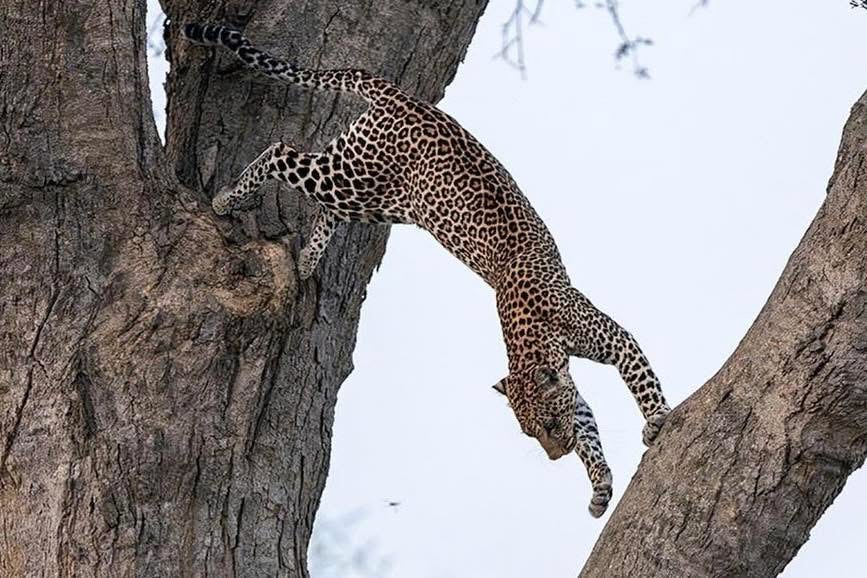
The lower forest zones harbour elephant, black-and-white colobus, Sykes’ monkey, and the elusive bongo. The Sirimon route’s forest section is particularly productive for wildlife encounters.
Retreating Equatorial Ice
One of Africa’s last equatorial ice bodies — retreating dramatically since 1900 but still accessible on technical summit routes. Ice against tropical forest far below creates Africa’s most visually arresting altitude contrast.
Trekker’s Summit at 4,985m
Point Lenana is accessible without technical equipment to fit, acclimatised walkers. The pre-dawn summit push arriving for sunrise above the cloud layer — with Batian and Nelion glowing in first light — is one of Africa’s most rewarding mountain experiences.
Key Areas & Experiences
Four routes offer different experiences. Most trekkers ascend one route and descend another for maximum variety.
Most varied and scenic ascent — open moorland, spectacular valley views, and reliable forest wildlife in the lower sections.
Universally the most beautiful route — the Hall Tarns, Temple and Emerald lakes, and the spectacular gorge make this the finest scenery on the mountain.
Steepest and fastest — two days up for fit trekkers. The ‘vertical bog’ section is notorious but the route delivers swift summit access.
The trekker’s summit at 4,985m — a pre-dawn push arriving for sunrise above the cloud layer. One of Africa’s most rewarding mountain moments.
Best Time to Visit Mount Kenya National Park
Driest window with clearest summit weather and firmest trail conditions.
Long dry season with stable weather patterns. Most reliable window for technical climbing.
Good conditions with reasonable summit weather. Less crowded.
Summit views frequently obscured. Technical climbing very challenging.
Curated Safaris Including Mount
Every Apes & Wildlife Safaris itinerary is tailor-made. These packages can be extended to include Mount Kenya National Park and other parks across Kenya.
12-Day Luxury Africa Trip and Zanzibar Island Beaches
Essential Tips for Mount Kenya National Park
Acclimatise Properly
Altitude sickness kills more summit attempts than weather. Follow ‘climb high, sleep low’ and build acclimatisation days into the itinerary.
Combine Sirimon Up and Chogoria Down
The Sirimon ascent–Chogoria descent circuit is Mount Kenya’s definitive experience — wildlife up, scenery down.
Stay at Old Moses and Shipton’s Camp
The permanent huts on the Sirimon circuit are the backbone of the route. Book ahead through Apes & Wildlife Safaris.
Move Quietly Through the Forest
The lower forest harbours elephant and buffalo. Slow, quiet movement with your guide’s forest knowledge maximises wildlife encounters.
Pair with Samburu
Mount Kenya and Samburu create a compelling central-northern Kenya circuit — alpine and semi-arid, mountain and plains.
Summit Before Dawn
Point Lenana at pre-dawn darkness for sunrise above the cloud layer — Batian and Nelion glowing in first light — is unforgettable.
Your Kenya Safari Awaits
Apes & Wildlife Safaris handles every detail — permits, transfers, expert guides, and hand-picked accommodation — from first enquiry to final sundowner.